About Us
Break Away
Breakaway’s Founder and inventor Drew Boersma was frustrated with current anchor designs and the anchor loss and ocean waste it created. He put pencil to paper and developed A Better way to anchor.
Recreational boaters and fishermen frequently encounter situations in which an anchor becomes lodged on the seabed and cannot be retrieved by conventional upward pulling. A common field-devised workaround involves relocating the anchor’s primary attachment point from the leading end of the anchor to the trailing end, then using the original attachment point as a secondary, breakaway connection. This breakaway connection is typically formed using disposable components such as zip ties or hose clamps. Under normal anchoring loads, the disposable element keeps the primary attachment in place; when a high retrieval load is applied, the disposable element fails, allowing the anchor to be pulled from the opposite direction to free it from an obstruction. This creates numerous drawbacks.
- Perishable components: Zip ties and hose clamps degrade, break unexpectedly, or require frequent replacement.
- Unreliable release: Premature failure may occur during anchor deployment or nesting, while failure to release may occur when the anchor is fouled, defeating the purpose of the system and resulting in loss of anchor.
- Functional interference: Anchor chains or ropes may wrap around the anchor neck, preventing correct breakaway action.
- Aesthetics and safety: The use of exposed disposable ties is unattractive, especially on high-end vessels, and broken components often fall into the water, contributing to marine debris.
- Anchor compatibility: Most anchors are not designed for loads applied in this unconventional configuration, which can reduce performance or cause operational inconsistencies.
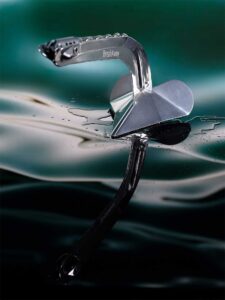
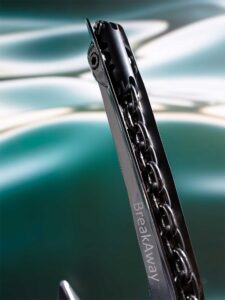
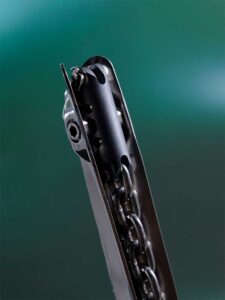
BreakAway eliminates these issues by providing a non-perishable, reusable breakaway mechanism integrated into the anchor. The mechanism is designed to reliably release under a predetermined load to allow reverse-direction retrieval yet can be quickly and easily reset without requiring consumable components. This ensures consistent operation, reduces maintenance, prevents accidental component loss into the water, and preserves the visual appearance of the vessel and equipment.